Vein Disorders Are More Than Cosmetic: The Medical Risks People Overlook
Most people who notice varicose veins or spider veins on their legs assume they're dealing with a cosmetic issue. They might not love the way their legs look, but they figure the problem is harmless. This assumption leads millions of Americans to delay evaluation for years, sometimes decades, while a progressive circulatory condition quietly worsens beneath the surface.
As a cardiovascular surgeon with over 30 years of experience who now focuses exclusively on vein care in Canton, GA, Dr. Louis Prevosti routinely treats patients who wish they had sought help sooner. The visible veins that prompted their initial concern were only the surface signs of a deeper problem: chronic venous insufficiency (CVI). This condition carries real medical consequences when left untreated.
Why Vein Problems Get Dismissed
There's a cultural bias at work when it comes to vein disorders. Varicose veins and spider veins are widely perceived as an aesthetic nuisance rather than a medical condition. Because the most obvious sign is visual, patients tend to categorize the problem alongside wrinkles or age spots rather than with high blood pressure or diabetes.
The slow pace of progression reinforces this perception. Venous insufficiency doesn't announce itself with sudden, alarming symptoms. Instead, it creeps in gradually. Your legs feel a little heavier at the end of the day. You notice some swelling around your ankles. You start getting cramps at night. Because each symptom develops slowly, it's easy to attribute these changes to aging, weight or long hours on your feet.
The numbers tell a different story. According to data published in Perspectives in Vascular Surgery and Endovascular Therapy, an estimated 25 million Americans have varicose veins, and up to 6 million have advanced venous insufficiency, which typically involves swelling, skin changes or ulcers. This is not a rare or trivial problem. It is one of the most common vascular conditions in the country.
The Progressive Nature of Venous Insufficiency
Understanding why venous disorders worsen over time requires a basic understanding of how the venous system works. The veins in your legs contain dozens of one-way valves that keep blood flowing upward toward the heart. Unlike arteries, which benefit from the heart's pumping force, leg veins rely on muscle contractions and valve function to move blood against gravity.
When these valves weaken or become damaged, blood leaks backward and pools in the lower legs. This backward flow, called venous reflux, increases pressure within the affected veins. Over months and years, that increased pressure damages additional valves, stretches vein walls and triggers chronic inflammation in the surrounding tissue.
This cascade does not reverse on its own. Without intervention, venous insufficiency progresses through predictable stages, from mild discomfort to visible vein changes to skin damage and, in some cases, open wounds that are extremely slow to heal.
Dr. Prevosti performs detailed venous duplex ultrasound examinations in his Canton office to map the entire venous system, identifying which veins are functioning normally and which are not. This diagnostic precision allows him to detect venous insufficiency even in patients who have no visible varicose veins but present with symptoms like chronic leg heaviness or swelling.
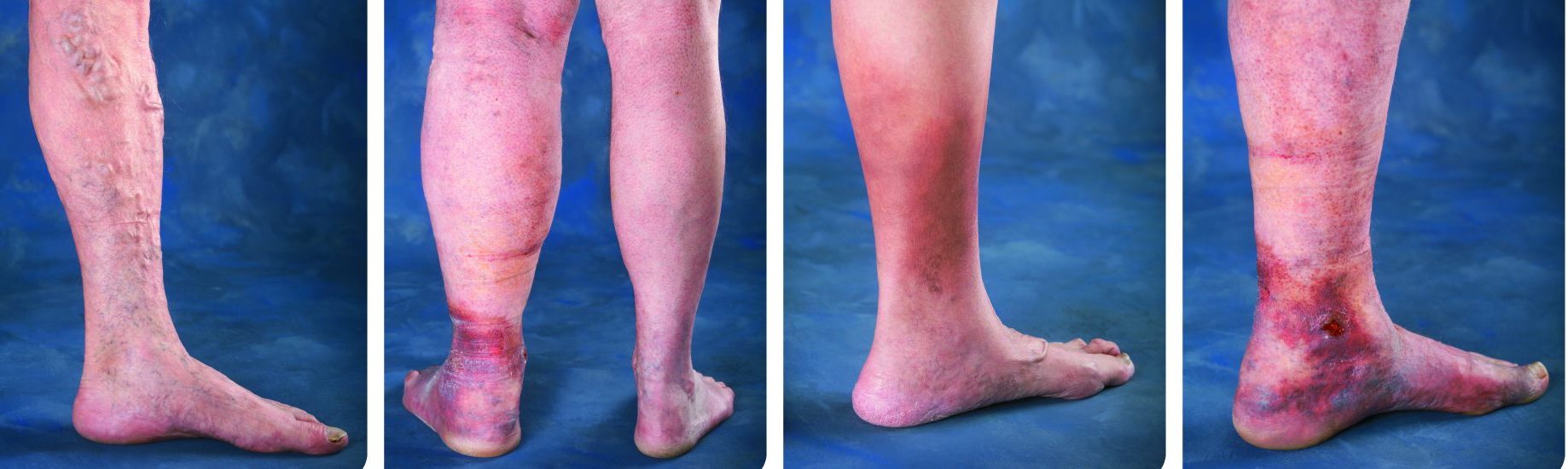
Medical Complications That Develop Without Treatment
Chronic Pain and Reduced Mobility
When venous insufficiency progresses, what started as mild heaviness can evolve into persistent leg pain, aching and throbbing that interferes with daily life. Patients describe deep discomfort that worsens throughout the day, especially with prolonged sitting or standing. Sleep disruption from night cramps and restless legs compounds the problem, leaving patients fatigued and unable to maintain their normal activity levels.
Unlike muscle soreness from exercise, vein-related pain does not resolve with rest alone. It tends to get worse over time, gradually limiting what you can do comfortably at work and at home.
Skin Damage and Venous Ulcers
Among the most serious consequences of untreated venous insufficiency are the skin changes that develop in the lower legs. Chronic inflammation from sustained venous pressure damages the skin and subcutaneous tissue through a predictable sequence. First comes redness, dryness and itching. Then the skin begins to darken as iron deposits from leaking red blood cells permanently stain the tissue (a process called hemosiderin staining). Over time, the skin thickens and hardens. Eventually, in some patients, the compromised skin breaks down entirely, forming venous ulcers.
These ulcers, which typically appear near the ankles, are notoriously difficult to heal because the underlying circulation problem prevents normal tissue repair. A review published in the International Wound Journal found that venous leg ulcers account for 60% to 80% of all chronic leg ulcers. Dr. Prevosti provides specialized wound care for venous leg ulcers alongside treatment of the underlying venous insufficiency, which is essential for healing and preventing recurrence.
Blood Clots
Varicose veins carry a risk of developing blood clots, a condition called superficial thrombophlebitis. This produces sudden pain, redness and hardening along the affected vein. While superficial clots are rarely dangerous, they can be quite painful and alarming, and they warrant prompt evaluation by a vein specialist. In some cases, superficial clots can extend into the deep venous system, which is a more serious medical concern.
Bleeding
On rare occasions, varicose veins that have enlarged significantly can erode through the overlying skin and bleed. This type of bleeding can be dramatic, and patients understandably find it frightening. While not life-threatening in most cases, it signals advanced venous insufficiency and requires immediate attention from an experienced vein specialist.
When to Seek a Vein Evaluation in Canton, GA
If you experience any of the following, a vein evaluation is worth pursuing: persistent leg aching or heaviness, swelling in the legs or ankles, visible varicose veins, skin discoloration near your ankles, nighttime leg cramps or an urge to constantly move your legs at rest.
Dr. Prevosti performs all evaluations, treatments and follow-ups at his single Canton location. The diagnostic process begins with a comprehensive ultrasound examination that maps your venous system and identifies the specific pattern of valve dysfunction. There is no need to visit a separate imaging center or surgery center.
You can also review Dr. Prevosti’s symptoms checklist to help determine whether your symptoms may be vein-related.
How Dr. Prevosti Treats Venous Disorders
Dr. Prevosti offers a full range of minimally invasive vein treatments performed in the office under local anesthesia. Most procedures take 30 minutes or less, and patients walk immediately afterward. Treatment options include:
- Radiofrequency ablation
- Endovenous laser ablation (EVLA)
- VenaSeal adhesive closure system
- Varithena foam therapy
- Ambulatory micro-phlebectomy
- Sclerotherapy for spider veins
Board-certified in Thoracic and Cardiovascular Surgery and a diplomat of the American Board of Venous and Lymphatic Medicine, Dr. Prevosti has performed over 20,000 vein procedures. Prevosti Vein Center is a pure vein practice, meaning 100% of its resources are focused on diagnosing and treating venous disorders.
Don't Wait for a Cosmetic Concern to Become a Medical Problem
Vein disorders are progressive. The earlier they are identified and treated, the better the outcomes and the lower the risk of complications like chronic pain, skin damage and ulcers. If your legs have been trying to tell you something, listen.
Contact Prevosti Vein Center in Canton, GA, to schedule your evaluation with Dr. Prevosti.
Take Back Your Comfort and Confidence With Prevosti Vein Center
Every patient at Prevosti Vein Center receives personal attention from Dr. Prevosti, a vein specialist with decades of experience in cardiovascular surgery. At Prevosti Vein Center, you will have access to the caliber of diagnostic and treatment approaches only available from a dedicated specialist.
Dr. Prevosti employs a compassionate and patient-centered approach that can reduce your symptoms and improve your comfort and daily activity level. His commitment to excellence in vein care has helped thousands of patients regain the confidence and freedom they need to pursue active lifestyles without the limitations of vein disorders.
Contact Prevosti Vein Center today to schedule an evaluation and discover how an experienced vein specialist can improve your quality of life.
